
Pick your location to see available services and connect with your local party pro.



Styleguide
Price Pin

Empty State
Pop-Up
Tool Tip
Please change your filter settings




Mobile Laser Tag Rentals: The Complete Planning Guide
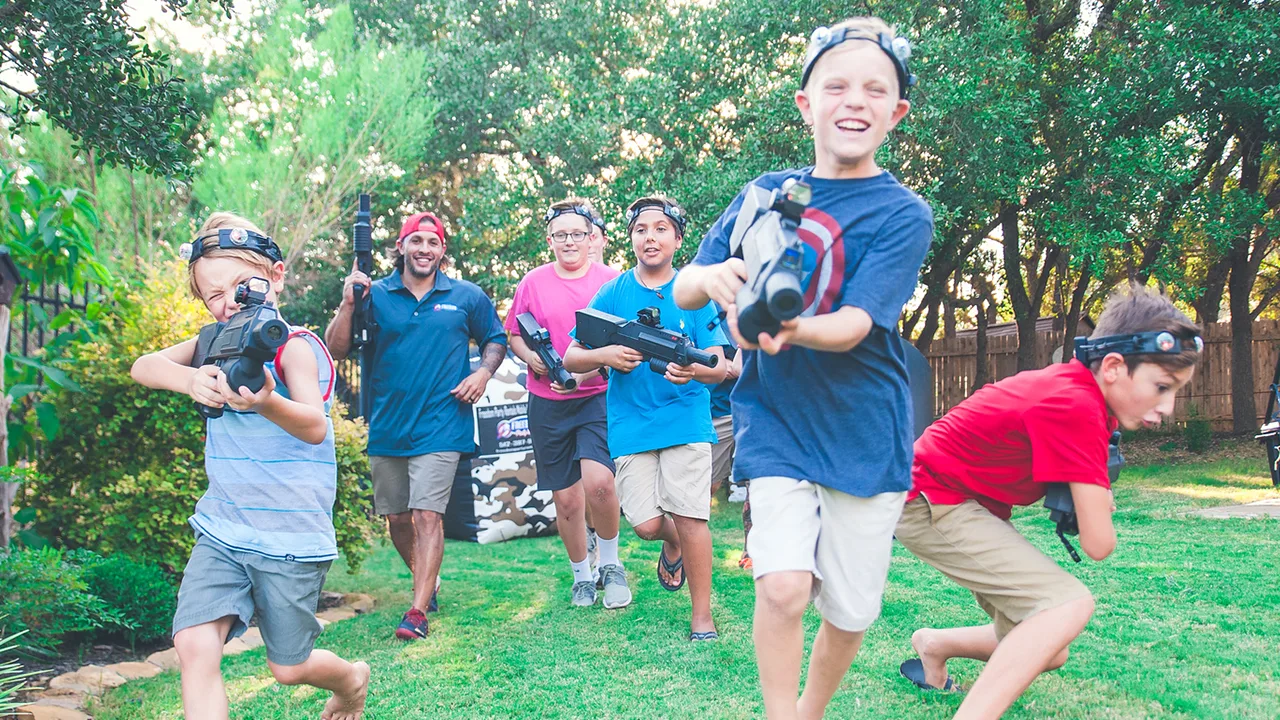
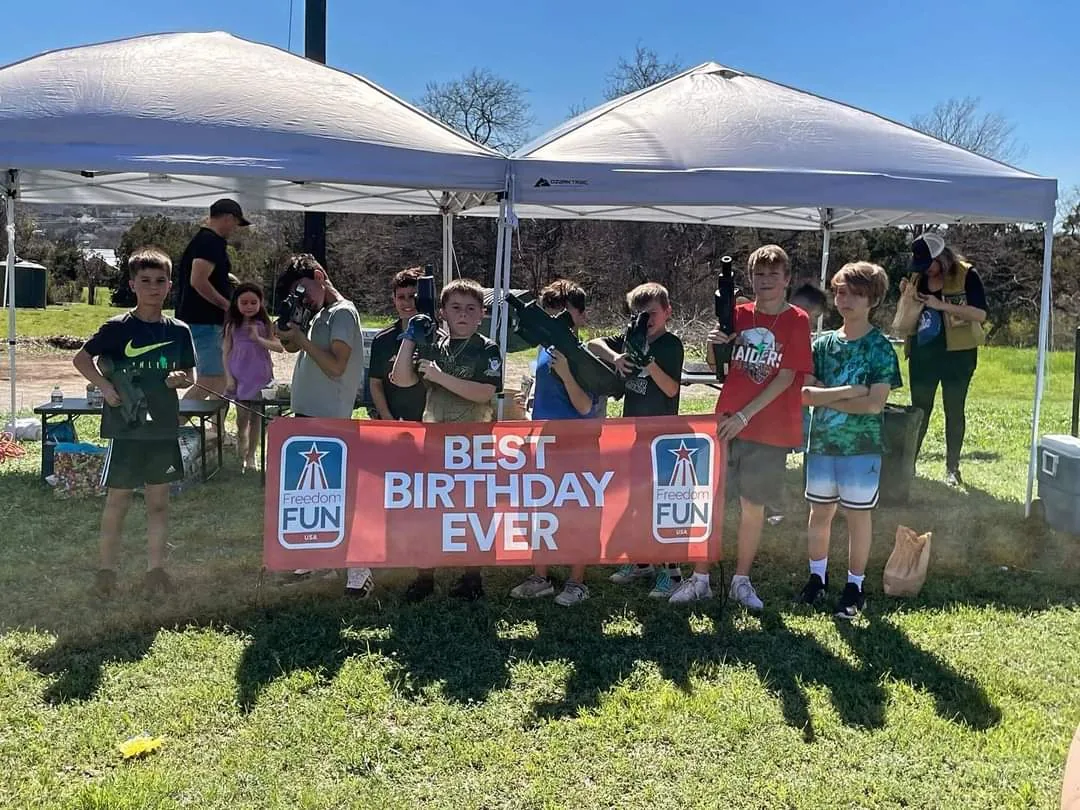
You already have the venue. It is your backyard, your church lawn, your school gym, or the park down the street.
That is the part most people get backwards when they start planning a laser tag party. They assume they need to load eight kids into two cars, drive to an arena, wait in line behind strangers, and pay per ticket. Meanwhile the best location for the whole thing has been sitting under their feet the entire time.
This guide covers what age each type of gear is built for, how much room you actually need, what happens if your yard is on the small side, and the questions worth asking any provider before you hand over a deposit.
Two gear tiers, two age ranges
This is the question we get most often, and it is worth answering plainly because most providers are vague about it.
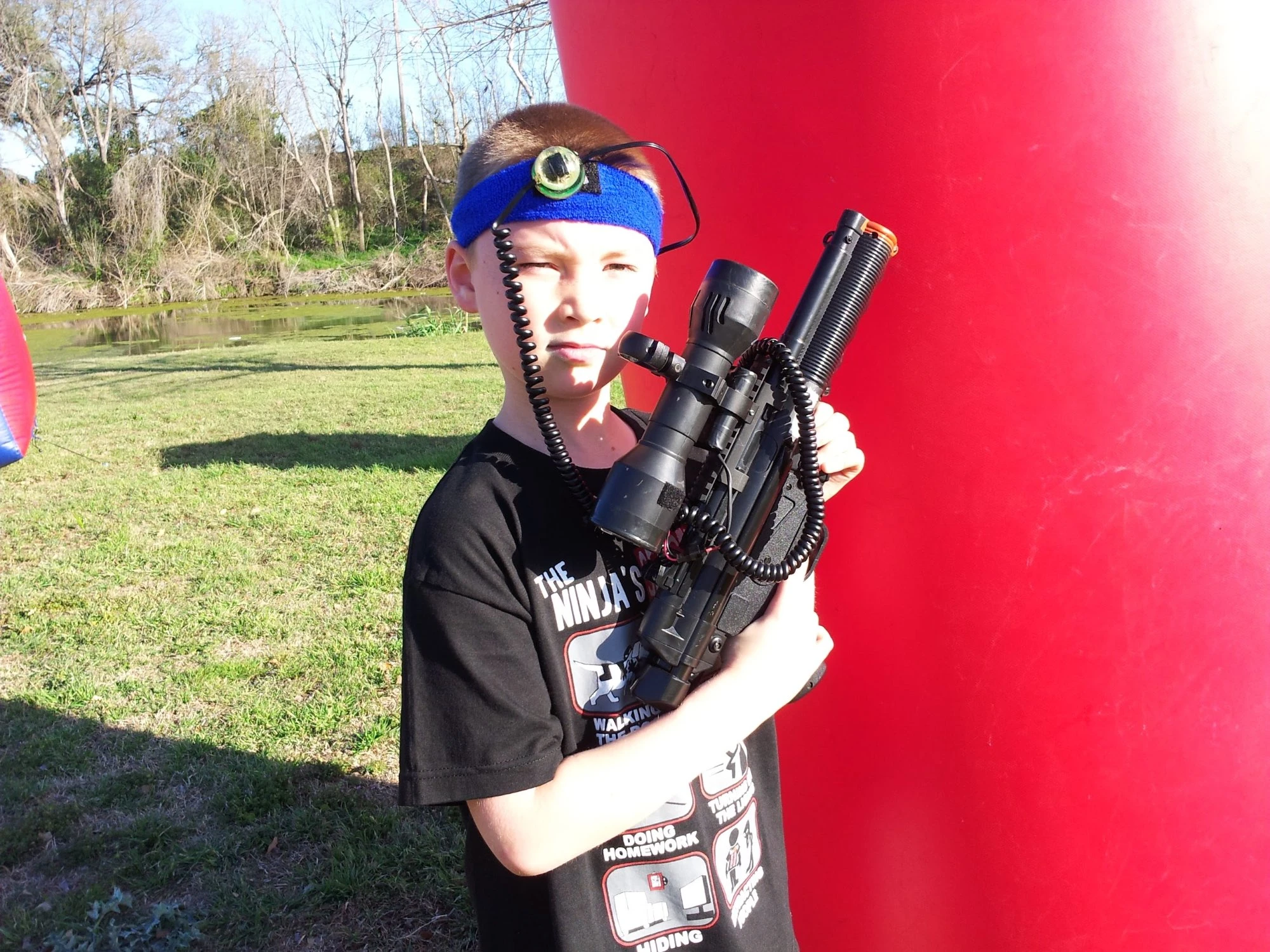
Phoenix Tagger: ages 5 to 10. Lighter equipment sized for smaller hands, with bright lights and simple operation. Built for younger players who want the fun without the complexity. This is the right call for kindergarten and early elementary birthday parties.
Halo-inspired Battle Rifle Pro: ages 7 and up. Full tactical gear with a red dot scope, 200-yard range, and pro-grade effects. Better suited to older kids, teens, adults, and corporate groups who want more strategy in the game.
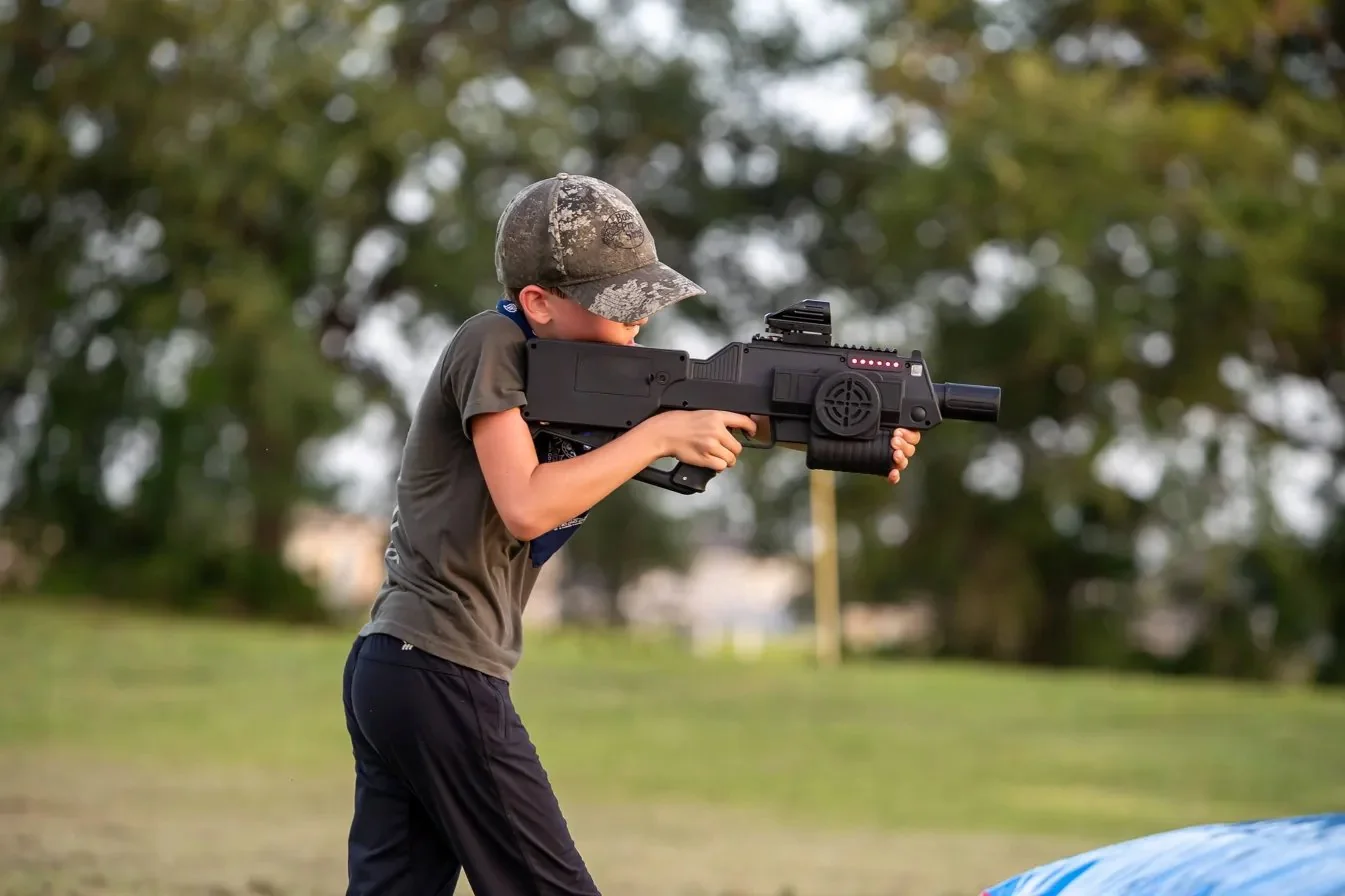
The overlap between 7 and 10 is deliberate. It gives your coach room to match the equipment to the group rather than to a birthdate. A cautious seven-year-old and a competitive one are different players, and the right gear depends on the kid, not the number.
Mixed-age groups are common. A party where most kids are six with two older siblings is a different call than a fourth grade field day. Tell whoever you book with the actual age range and let them recommend the tier.
Space requirements are the same either way, so choosing between them is purely about the players.
Planning your space
The honest answer is that we work with what you have.
A space about the size of a basketball court is ideal. That gives room for a full course with good sight lines and plenty of movement. A church lawn, a school gym, or a section of a park usually lands in that range.
But a smaller backyard works too. We adjust the course layout, the number of barricades, and the game formats to fit the space. Tighter areas actually make for faster, more energetic games, which a lot of younger groups prefer. Do not count yourself out because your yard is average sized.
Surface is flexible. Grass, turf, gym floor, and paved lots all work. Existing features help rather than hurt, so trees, shrubs, and playground equipment get worked into the course layout for cover.
If you are not sure whether your space works, send us a rough idea of the dimensions when you reach out and we will tell you straight.
You do not need a power outlet
This is worth knowing if you are looking at a park, a field, or anywhere without a building nearby. We can bring battery powered blowers to set up the inflatable barricades, which means the course goes anywhere you want it.
The only thing we ask is that you tell us when you book. Battery setups take a bit of planning on our end, and we would rather bring the right equipment than improvise on the day.
Larger events
School festivals, church events, and community days run on rotation. Groups cycle through shorter rounds so the line keeps moving and everyone gets multiple turns. Crowd flow and equipment swaps are the crew's job, not yours.

If you are planning something at that scale, bring it up early. The setup and staffing look different than a backyard party.
Why daylight is not a problem
The gear uses infrared, the same technology as a TV remote. There is nothing physical in the air. No pellets, no darts, no paint. Sensors register hits automatically, which quietly solves the biggest problem in any kids game: the argument about whether someone actually got tagged.
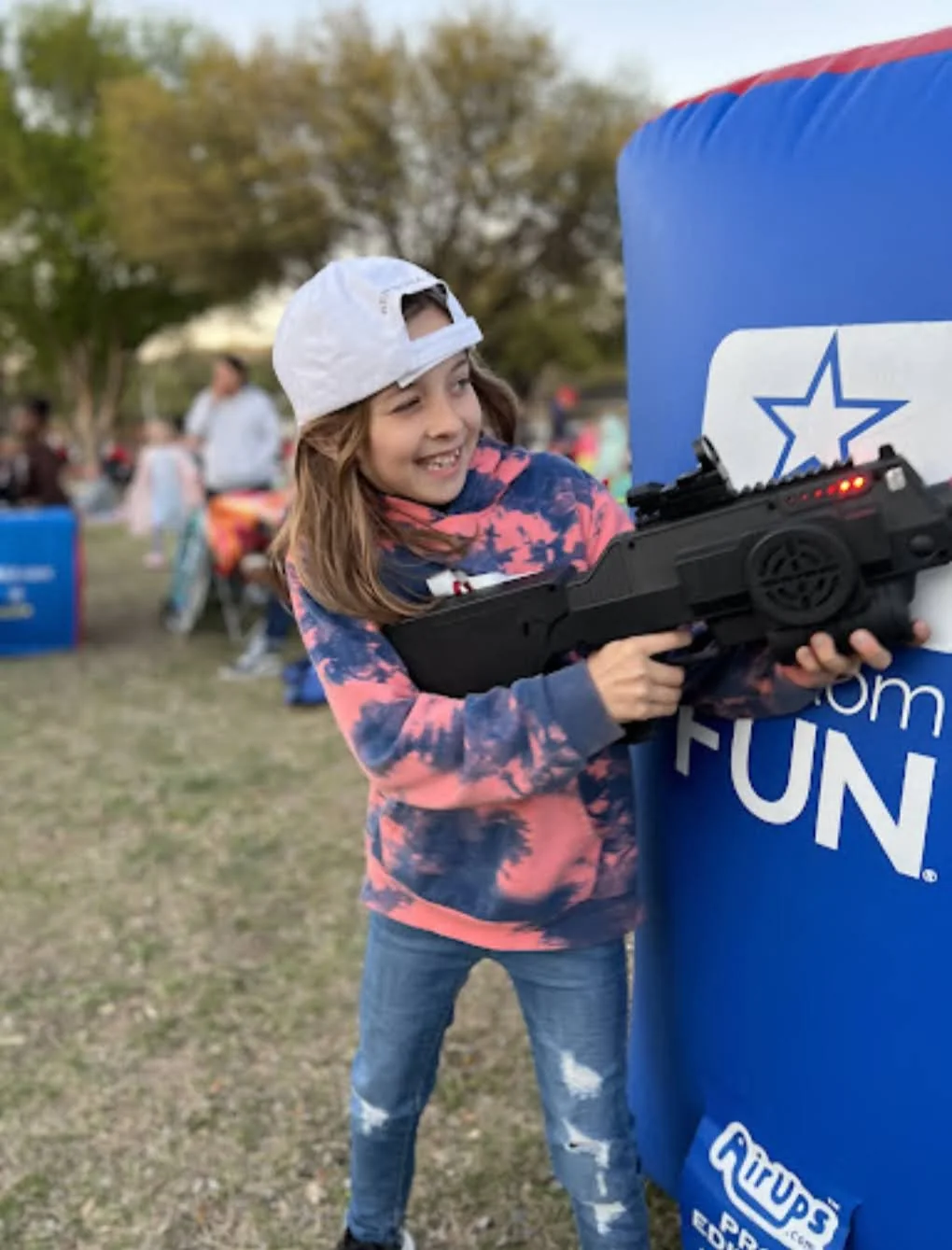
Because it is infrared rather than visible light, the equipment works in full sun. You do not need a dark room, and a midday birthday party works exactly as well as an evening one. That matters more than it sounds, because it means you are not scheduling your child's party around sunset.
What to ask before you book
A short list that will tell you most of what you need to know about any provider:
- Is the crew certified, and by whom?
- Are staff background checked?
- Is the equipment sanitized between events?
- What is the total cost, including delivery to your address?
- What happens if it rains?
On certification: our teams are SIOTO certified, which means training in equipment handling and safety standards through the Safe Inflatable Operators Training Organization. Our inflatable equipment meets ASTM F2374-22, the national safety standard for inflatable amusement devices. Every staff member is background checked before working an event.
On weather: our gear is electronic and cannot run in active rain. If weather turns, we reschedule at no charge. Full details are in our cancellation policy. It is worth confirming any provider's weather terms in writing before you pay, because policies vary widely.
On cost: delivery and setup pricing depends on distance from the local team, so it varies by market. Ask for the full number upfront rather than a base rate. A good provider will quote you the total before you commit, not at the door.
Booking with Freedom Fun
Freedom Fun runs mobile laser tag across 21 markets nationwide, with local teams and consistent standards in each one. Full details on packages, pricing, and what is included are on our mobile laser tag page.
Ready to plan yours? Check availability for your date and we will help you match the right gear tier to your group.
Laser tag pairs well with a few other things, too. Groups that book a longer event often add an outdoor movie screen to wind down after, or run Nerf Wars alongside for younger siblings.
Frequently Asked Questions
How old do kids need to be for laser tag?
The Phoenix Tagger works for ages 5 to 10. The Halo-inspired Battle Rifle Pro is built for ages 7 and up. If your group spans both ranges, tell us the actual ages when you book and we will recommend the right setup. Space requirements are identical either way, so it comes down to the players.
Can laser tag be played during the day?
Yes. The equipment uses infrared, which works in full sunlight. Afternoon birthday parties, school field days, and corporate picnics all work without needing a dark space.
Is laser tag safe for young children?
There is nothing physical being fired. No pellets, no darts, no paint, which removes the impact and eye injury risks that come with paintball or airsoft. It is a non-contact game, and a coach supervises every round.
How much space do I need?
Less than you probably think. A space about the size of a basketball court is ideal, but a regular backyard works fine. We adapt the course layout and game formats to the space you have, and tighter areas often make for faster, more energetic games. Grass, turf, gym floors, and paved lots are all fine surfaces. If you are unsure, tell us your rough dimensions and we will give you a straight answer.
Do I need a power outlet?
No. We can bring battery powered blowers to inflate the barricades, so parks, open fields, and locations without nearby power all work. Just let us know when you book so we bring the right setup.
Do you provide insurance for school and church events?
Yes. We carry liability insurance on every event and can provide a certificate of insurance on request, which most school districts and church committees require. Ask when you book so we can get the paperwork moving early.
How many people can play at once?
Larger groups run on rotation with shorter rounds, so a school festival or community event can move hundreds of players through in an afternoon. Our crew handles the rotation and equipment swaps.
How does laser tag compare to paintball or Nerf?
Laser tag has no cleanup and no sting. No darts in the lawn afterward, no paint on the fence, no protective padding required. Nerf Wars is a good alternative for younger groups or when you want a different feel, and some events run both.
How long does setup take?
Our crew arrives ahead of your start time and typically needs 30 to 45 minutes to set up the course and test the equipment. Setup and breakdown do not count against your event time.

Get a quote
How it works (it’s easy!)
Simply tell us about your event and how you’d like to be contacted.
We’ll help you plan the perfect setup—no pressure, no hassle.